Skip to content




A folding electric bike is the ultimate urban equalizer. It bridges the gap between suburban commutes and dense city centers, easily bypassing traffic gridlock and parking nightmares. However, seamlessly integrating a 20-to-25 kg electric vehicle into your everyday apartment life, office environment, or car trunk requires more than just releasing a frame hinge.
Generic storage guides often tell you to "fold the bike and put it in a corner." But real-world ownership involves protecting lithium-ion battery health, preventing frame corrosion, balancing car payload dynamics, and preserving living space. Here is your engineering-grade playbook for storing and transporting your folding e-bike with total peace of mind.

1. Indoor Storage Architecture: Protecting Your Bike & Living Space
Storing a folding e-bike indoors shields it from weather damage and theft, but doing it incorrectly can scuff your walls, damage delicate drivetrain components, or shorten battery life.
Space-Saving Layouts That Work
● The Entryway Nook: Fold the bike immediately upon entering. Place a heavy-duty, lip-edged rubber boot tray beneath the tires to catch dirt, rainwater, and road salt before it touches your flooring.
● Under-Desk Office Storage: When taking your e-bike into the workplace, store it in its folded state under your desk or against a structural pillar. Always position the bike with the derailleur facing upward to prevent bending the gear hanger under its own weight.
|
Storage Location |
Environmental Risk |
Essential Protection Action |
|
Apartment / Entry |
Floor scuffs & water |
Use rubber floor trays & frame pads |
|
Garage / Shed |
Thermal shock & damp |
Remove battery; store inside at 15–22°C |
|
Office / Under-Desk |
Accidental kicks & bumps |
Chain-side up; lock folding latch safety |
Long-Term Battery Care (The 60% Rule)
Never store your e-bike battery completely full or entirely drained for extended periods. Lithium-ion chemistry suffers maximum stress at 100% state-of-charge (SoC). If storing your bike for over two weeks, charge or discharge the battery to roughly 50%–60% (3.8V per cell) and store it in a cool, dry place between 15°C and 22°C (59°F–72°F).
2. Vehicle Transport: Master Trunk Loading & Rack Dynamics
Transporting a folding e-bike inside your vehicle trunk eliminates the need for expensive, wind-dragging exterior bike racks. However, moving a compact 50 lb bike requires smart mechanics to avoid back strain and car interior damage.
The 3-Step Trunk Loading Strategy
1. Pop the Battery First: Always unlock and remove the removable battery before lifting. Modern designs like the CY20 Pro Portable Commuter Electric Bike feature a seat-post integrated battery that detaches in seconds, instantly shedding critical lifting weight for effortless trunk loading.
2. Use a Trunk Liner or Furniture Blanket: Lay a padded moving blanket across your trunk sill. Slide the folded frame over the sill rather than lifting it dead-weight into the deep trunk cavity.
3. Secure Against Lateral Shifts: Use adjustable cargo tension straps anchored to your trunk's tie-down loops. An unsecured e-bike shifting during hard braking can dent interior quarter panels or crack tail-light housings.

3. Multi-Modal Transit: Navigating Trains, Buses, and Elevators
The true strength of a folding e-bike lies in multi-modal commuting—combining bike legs with train, subway, or bus travel.
● Pre-Fold Before the Platform: Never wait for the train doors to open before folding your bike. Fold and latch the frame while waiting on the platform so you can step directly onto the train without blocking passenger flow.
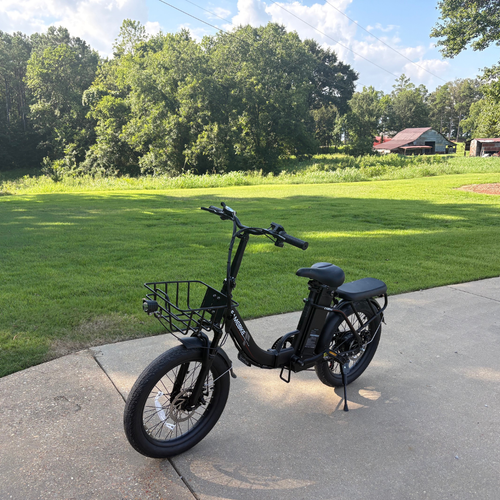
● Utilize Travel Bags and Trolley Modes: If your commute involves stairs or long station corridors, choosing a compact model with stable geometry makes a world of difference. The SAMEBIKE CY20 Pro combines a quick-fold aluminum alloy frame with wider 20×3.0" city-fat tires, offering superior standing balance when folded and maximum traction when rolling through wet city streets.
● Smart App Monitoring On The Go: When traveling, tracking your e-bike's status is vital. With the Smart App Control featured on the CY20 Pro, you can check battery health and review ride metrics right from your smartphone while riding the train.
4. Proactive Maintenance Routine for Folders
Folding hinges introduce moving parts that traditional bike frames don't have. Keep these critical inspection points on your monthly checklist:
● Hinge Latch Tension: Periodically inspect main frame and stem folding latches. Adjust the tension micro-screws so the clamp closes with firm resistance without requiring forced leverage.
● Cable Housing Flex: Repeated folding bends brake hoses and display wiring. Inspect cable housing for kinks or outer sheath cracking near the main folding pivot point.
● Hinge Lubrication: Apply a drop of dry PTFE lubricant to the hinge pin every few months to prevent squeaks and binding caused by grit accumulation.
The Ultimate Compact Commuter Companion
If you are looking for a next-generation folding e-bike engineered for effortless transport, smart storage, and all-terrain urban comfort, explore the CY20 Pro Folding Electric Commuter Bike. Featuring an upgraded 48V platform, 100km extended range, 20×3.0" wide tires, and Smart App connectivity, it's designed to redefine your everyday city journey!